← All matchups
Apollo Go Stellar vs Apollo City 2.0
The Apollo City 2.0 has the longer estimated range — 25.3 miles against 14.2 — because it carries 960 Wh to the Apollo Go Stellar’s 540. The Apollo Go Stellar is the lighter of the two at 46 lb, which puts it in the curb lift class. Everything else is below.
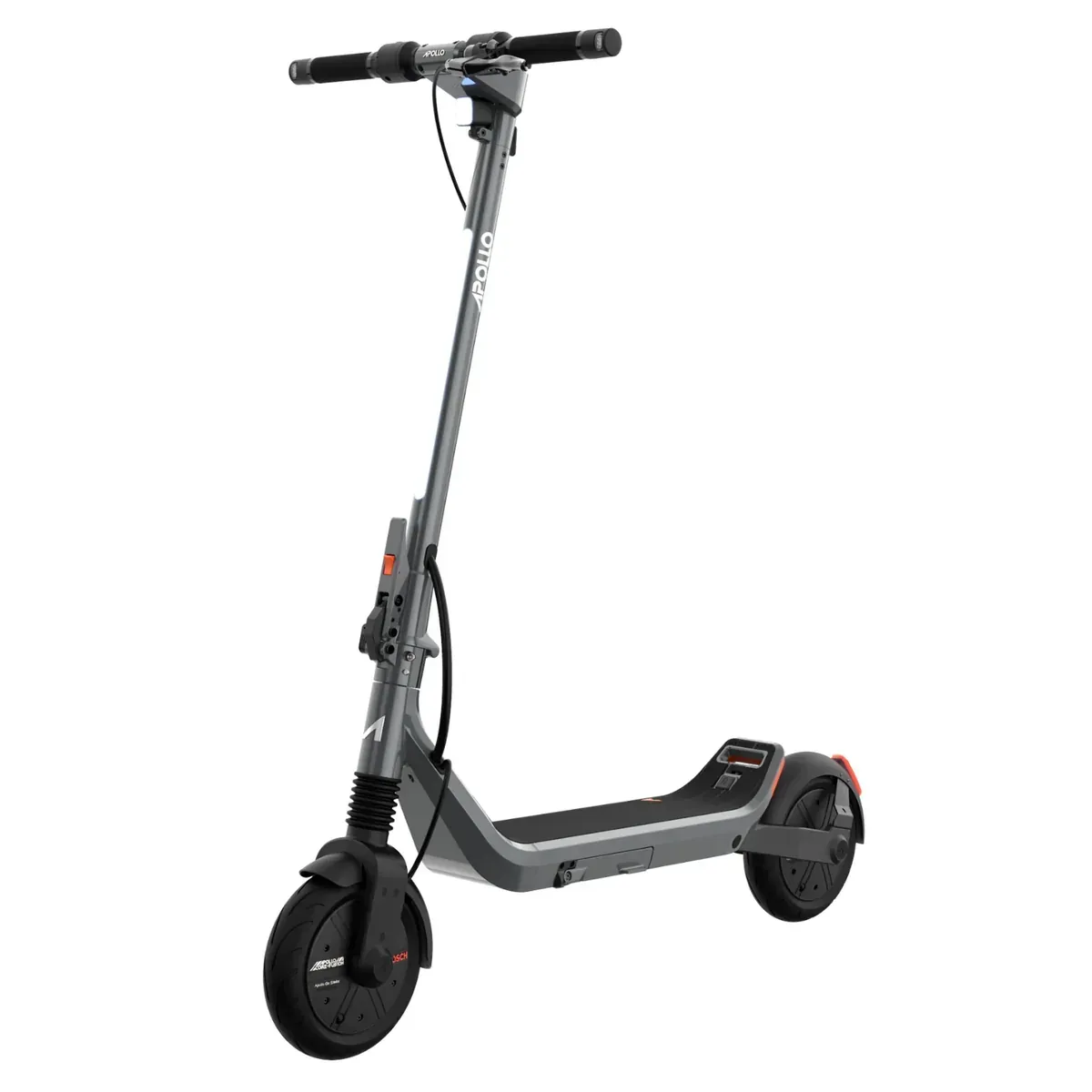
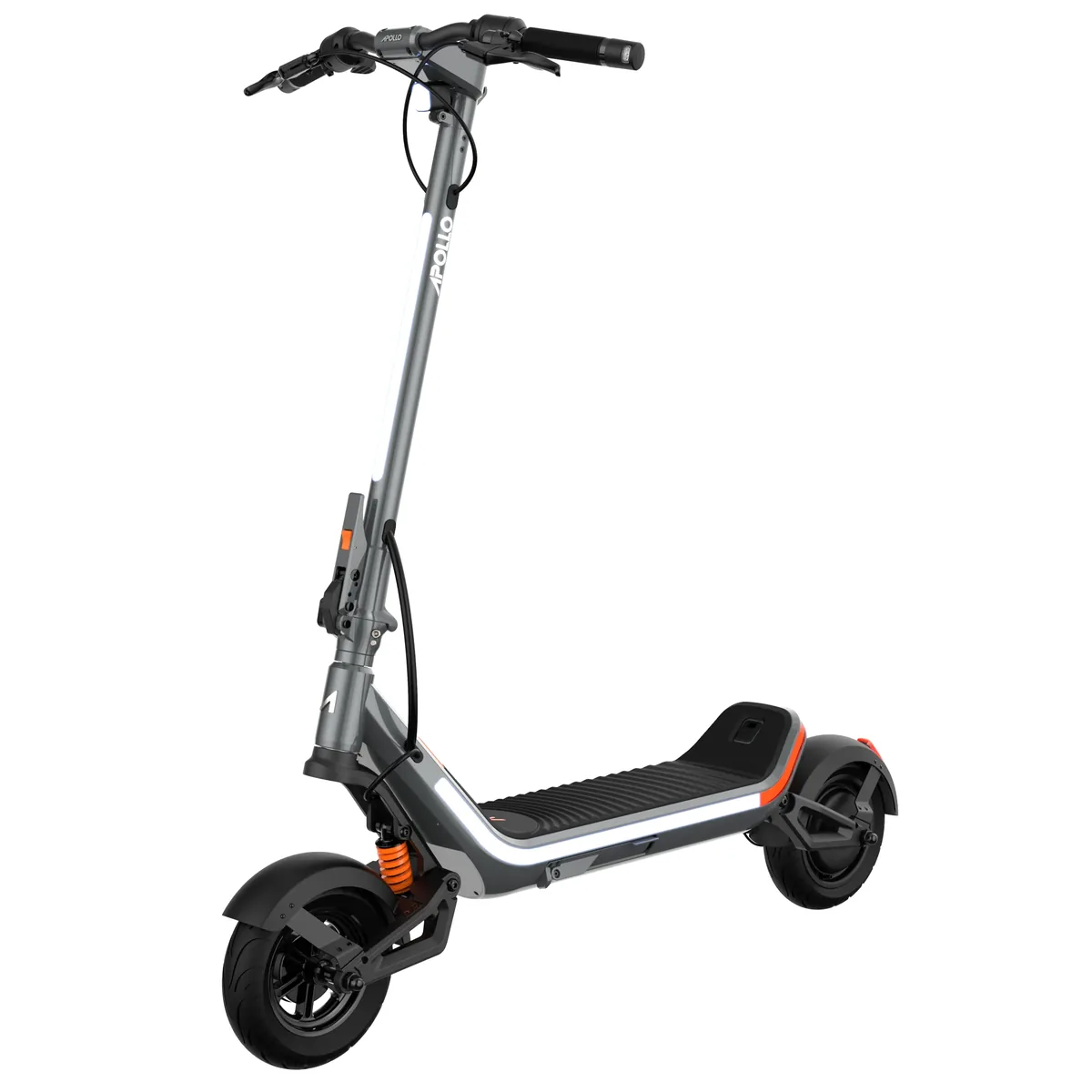
| Estimated range | 14.2 mi | 25.3 mi |
|---|---|---|
| Claimed range | 30 mi (2.1x the estimate) | 38 mi (1.5x the estimate) |
| Tested range | 19.8 mi | 29.8 mi |
| Top speed | 28 mph | 32 mph |
| Motor | Dual motor, 700 W (1,500 W peak) | Dual motor, 1,000 W (2,000 W peak) |
| Battery | 540 Wh at 36 V | 960 Wh at 48 V |
| Wh per dollar | 0.45 Wh/$ | 0.69 Wh/$ |
| Wh per pound | 12 Wh/lb | 15 Wh/lb |
| Weight | 46 lb — curb lift | 65 lb — rolls only |
| Max rider weight | 265 lb | 265 lb |
| Tires | 9" self-healing | 10" self-healing |
| Suspension | Dual | Dual |
| Brakes | Rear drum with regenerative front | Front mechanical disc with regen |
| IP rating | IP66 | IP66 |
| Charge time | 7.5 h | 4.5 h |
| Folded size | 46.5 x 20.5 x 22.8 in | 48 x 26.6 x 22 in |
| Deck width | 6.3 in | 7.5 in |
| Lights | Headlight, taillight, turn signals | Headlight, taillight, turn signals |
| App | Yes | Yes |
| Cruise control | Yes | Yes |
| Approx. price | ~$1,199 | ~$1,399 |
| Released | 2025 | 2025 |
Apollo Go Stellar: the case against
- Rear drum with front regen — light braking for a 28 mph dual motor
- Nine-inch wheels are small for this speed
- 7.5-hour charge
- Apollo's support and repair record draws consistent owner criticism across models
Apollo City 2.0: the case against
- Earlier generations produced multiple reports of the handlebar assembly failing at the hinge in motion
- Front disc plus regen only — no rear mechanical brake on a 32 mph scooter
- Owners report a flimsy kickstand and a carry latch that works loose
- Cannot power on or use Bluetooth while charging
- 65 lb